
 http://carscameraschronicillness.blogspot.com/ is his blog, he's hailing from Australia, and the first thing you begin to wonder about is the title, what is the chronic illness? Gastroparesis, which is essentially the stomach muscles being partially paralysed and unable to move food through properly, caused by a food poisoning 11 years ago. Not good, bit of an understatement.
Sunday, June 5, 2011
Rohan is putting up some interesting photos, here's a couple to get you interested
Monday, May 16, 2011
A bit of this and that for a moment

 1925 Monotrace found on http://flickriver.com/photos/jk1971/tags/monotrace
Racing legends Donnie Allison, Sid Collins, Roger McCluskey, Ed McCulloch, Augie Pabst, Bruce Penhall and Ed Winfield will be enshrined into the Motorsports Hall of Fame of America when the organization stages its annual induction celebration on August 23 and 24, 2011 in Detroit.
Ed Winfield was regarded as one of the all-time great mechanical minds motorsports has ever known. He was an expert in engine design and carburation and played a major role in the development of the famed Novi engine with his brother, Bud. He is generally recognized as the “Father of the Racing Cam Business,” making his first performance camshaft in 1914 at age 13 and is credited with creative cylinder head designs and other engine advancements.
A Winfield exotic camshaft was in Bulchowsky's Old Yeller
http://www.landspeedproductions.biz/ed-winfield-finally-gets-the-nod-byt-the-motorsports-hall-of-fame.html There is a motorcycle museum in France, the Chateau de Bosc http://www.expeditionportal.com/vehicules/motorcycles/70-other/342-discovering-a-secret-motorcycle-museum-in-france.html
 from http://www.anshobijlmakers.nl/Home/Home.html originally, found on http://basskick.tumblr.com/
Monday, May 2, 2011
Lamborghini "Turned Turtle"
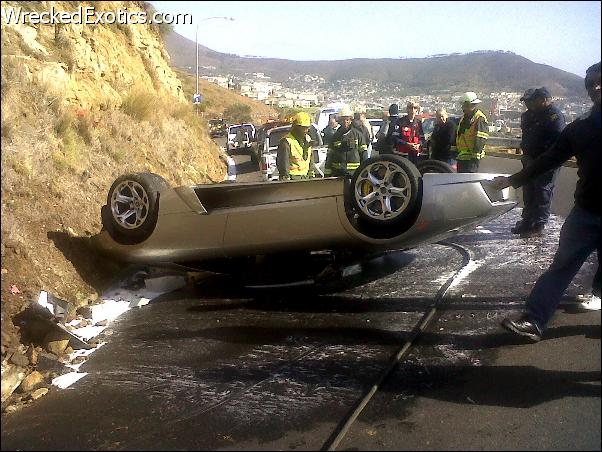

Wednesday, April 27, 2011
Lively Shanghai Motor Show


 Shanghai Motor Show a centre for Asian automotive world. This exhibition opened to the public on 21 April to 28 April 2011.
Tuesday, April 26, 2011
Lamborghini Aventador LP700-4
 |
| From AutoBlog, the Lamborghini Aventador LP700-4 (say that 5 times fast) |
See the rest of the article at AutoBlog.com
2012 Lamborghini Aventador LP 700-4 [ VIDEO ]

The two-minute long promotional film shows the Aventador LP 700-4 in an apocalyptic-like scene scrambling to get away as the earth crumbles under its tires. To be honest, it’s a bit too much on the fantasy side for our tastes, but we’ll let you be the judge of that.
GALLERY


Lamborghini Aventador LP700-4
According to its tradition, Lamborghini's new flagship bears the name of a bull -- naturally, a particularly courageous specimen from the world of the Spanish Corrida. Aventador was a bull bred by the Don Celestino Cuardi Vides family that in October 1993 entered into battle at the Saragossa Arena, earning the "Trofeo de la Peña La Madroñera" for the outstanding courage shown during the fight.t
Above excerpt and photos taken from Los Angeles dealer, see their site for the complete post.


There is also a fabulous post with several videos of the Aventador LP700-4
at the Vatican on one of my favorites sites Stipistop, please look.
GALLARDO LP570-4 SUPERLEGGERA

Even more dynamic, lighter, more powerful and stunning - the Lamborghini Gallardo LP570-4 Superleggera is the new top model in the Gallardo line-up. Its evocative "superlight" badge refers to a driving machine of true sporting character and describes a high-performance and lean automotive athlete. The Superleggera makes its entrance to continue the success of its predecessor, launched in 2007, of which Lamborghini produced and sold no less than 618 in just one year.
Compared with the already lean Gallardo LP560-4, the weight of the Lamborghini Gallardo LP570-4 Superleggera has been trimmed by 70 kilograms (154 lb). The super sportscar from Sant'Agata Bolognese boasts a dry weight of no more than 1340 kilograms (2954 lb) - the lightest road-going model in Lamborghini's range, and a new arrival in one of the most exclusive market niche segments.
One key factor is the exterior and interior components made from carbon-fiber. Carbon-fiber is ideal for the manufacture of sportscars as its use allows for weight reduction and improved mechanical features. The car's performance is thus enhanced thanks to a better weight-to-power ratio and reduced total mass, which means that CO2 emissions are also lower. Lamborghini has been at the forefront in this material's application for many years, and now the brand is extending its leadership even further.
The V10 power unit with 5.2 liters (317,6 cu in) of displacement generates 419 kW (570 CV) in the Lamborghini Gallardo LP570-4 Superleggera. This puts the weight-to-power ratio of the new top model at only 2.35 kilograms (5.18 lb) per CV and guarantees breathtaking performance. The Lamborghini Gallardo Superleggera handles the dash from zero to 100 km/h (0-62 mph) in 3.4 seconds and flies past the 200 km/h (124 mph) mark only 10.2 seconds later, ultimately reaching 325 km/h (202 mph). The engine with "Iniezione Diretta Stratificata" gasoline direct injection also boasts an impressive degree of efficiency. Its fuel consumption and CO2 emissions have been reduced by 20,5 percent compared to the previous model.
The Lamborghini Gallardo LP570-4 Superleggera is an uncompromising driving machine. Its running gear, with its mighty braking system, has a dedicated and exceptionally precise set-up, while its 19-inch wheels, Pirelli P Zero Corsa, clad in Pirelli sports rubber, are extremely light. The Lamborghini Gallardo LP570-4 Superleggera brings a whole new meaning to the term "super sportscar".
Design and aerodynamics - The beauty of power
The elegance of every Lamborghini rests on both its extreme power and precise functionality. The Lamborghini Gallardo LP570-4 Superleggera's bodyshell is sculptured and completely free from stylistic additions. Dimensions define the contours of a dynamic wedge - 4.39 meters (172,7 in) long, 1.90 meters (74,8 in) wide, but only 1.17 meters (45,9 in) high.
Exterior modifications are all directed at increasing aerodynamic effects. Working closely with wind tunnel experts, the designers from Lamborghini's Centro Stile remodeled the front bumper - three-dimensional, deeply recessed elements form trapezoidal frames for the large air intakes. Together with the V-shaped, sharply defined nose and the LED daytime running lights, the black elements give the front end a razor-sharp look, reminiscent of Lamborghini's top model. The new design increases the supply of cooling air and improves the downforce on the front axle.
The modifications to the fully-covered underbody, which include new sill elements and a redesigned diffuser incorporating four large tailpipes, help to achieve better aerodynamic results. The Lamborghini Gallardo LP570-4 Superleggera sports a small rear spoiler as standard. A big rear spoiler is available as an option.
The bodyshell - Intelligent lightweight engineering
The model on which the Lamborghini Gallardo LP570-4 Superleggera is based, the Gallardo LP560-4, is already a prime example of Lamborghini's lightweight engineering philosophy, with its dry weight of 1410 kilograms (3108.5 lb). Its bodyshell is made from aluminum, with moulded node elements and extruded parts forming an extremely stiff framework into which the aluminum panels are integrated. The spaceframe structure is impact-resistant and forms the basis for the super sportscar's precise handling.
Against this background, the task of reducing the weight by a further 70 kilograms (154 lb) presented a huge challenge to Lamborghini engineers - the target figure, a weight-to-power ratio of 2.35 kilograms (5.18 lb) per CV, sets a new best among the competition. Lamborghini engineers handled the task as they usually do - with hi-tech competence and aesthetic flair.
The rear windshield and side windows are made from robust and resistant polycarbonate. The engine cover also includes a polycarbonate window, beneath which the V10 engine is displayed like a technical work of art. The long cover section runs from the roof to the rear of the vehicle and is made from carbon-fiber. Engineers also selected carbon-fiber for the rear spoiler, sills, diffuser, parts of the underbody paneling and the fine exterior mirror casings.
With its minimal weight and extremely high rigidity, carbon-fiber is the ideal material for a super sportscar. As far back as the 1980s, Lamborghini was already gathering experience in this field with the Countach. Today, some parts of the Murciélago's structure are made from carbon-fiber. In order to secure this leading position even further, the brand from Sant'Agata Bolognese established a center of excellence for carbon-fiber materials, where specialists are developing components, working with efficient manufacturing technologies.
Lamborghini's carbon-fiber strategy is further proven by its foundation of the "Automobili Lamborghini Advanced Composite Structures Laboratory" (ACSL) at the University of Washington in Seattle, USA. Lamborghini provides support to the facility and its long-term, co-operative research work in the fields of aeronautics and astronautics, together with the composite materials' application within the automotive sector. Alongside the University of Washington, aircraft company Boeing is also among Lamborghini's partners.
The aircraft manufacturer commands enormous expertise in the field of composite materials. With the new Type 787 Dreamliner, Boeing has developed the world's first commercial aircraft built entirely from carbon-fibre. Thanks to its superior characteristics, it consumes around 20 percent less fuel than a conventional aeroplane.
The interior and the use of carbon-fiber
Altogether, carbon-fiber components make up 40 (88 lb) of the 70 kilograms (154 lb) saved on the Lamborghini Gallardo LP570-4 Superleggera. In the interior, too, engineers aimed to reduce weight as much as possible. The center tunnel cover, the door panels and the surround of the e-gear automated manual transmission lever are made from carbon-fiber. The high-end material is also used for the sports seats' shells. They make a significant contribution to the overall weight reduction.
Just like the rest of the cockpit, the sports seats are clad in lightweight Alcantara instead of leather. At Lamborghini, weight reduction is in no way synonymous with sacrifice - the Lamborghini Gallardo LP570-4 Superleggera is still equipped with air conditioning and electric powered windows as standard.
Lamborghini has built on this strength - the interior is crafted with passionate attention to the tiniest detail; high quality materials indulge both visually and sensually.
The interior, including roof and mats, retains the Lamborghini Gallardo's black finish. As a contrasting color for elements such as seat trims and stitching, customers can choose among green, yellow, orange and two shades of gray. They match exterior paint finishes in Verde Ithaca, Giallo Midas, Arancio Borealis, Grigio Telesto, Nero Noctis and Bianco Monocerus.
The engine - 10.2 seconds from zero to 200 km/h
In the Lamborghini Gallardo LP570-4 Superleggera, LP stands for "longitudinale posteriore" and refers to the orientation of the V10 engine - which is mounted longitudinally behind the driver, just like every Lamborghini engine. The number 570 refers to the maximum power output in CV, which equates to 419 kW and is available at 8,000 rpm. Equally impressive is the pulling power - the torque curve peaks at 540 Nm (398,3 ft lbs) at 6,500 rpm. The increase of 7 kW (10 CV) is the result of the new dedicated engine management strategy.
The V10 has a displacement of 5204 cm3 and achieves a specific output of 80.5 kW (109.6 CV) per liter. Special features on this long-stroke engine with an aluminum crankcase include dry sump lubrication and a cylinder angle of 90 degrees. Both solutions lower the center of gravity, thus improving the handling dynamics. To ensure an ideal combustion chamber fill, the engine has an adjustable intake manifold and continuous control of the chain-driven camshafts.
The crankshaft is conceived as a dual-plane crank - the connecting rods of opposing pistons share one bearing. This configuration delivers alternating ignition intervals of 54 and 90 degrees; a unique sequence that is the reason for the compelling, racing car-like sound of the V10. As the revs rise, resounding bass notes are overlaid with razor sharp harmonics.
The powerful V10, combined with the model's weight reduction, gives the Lamborghini Gallardo LP570-4 Superleggera breathtaking performance. The car accelerates zero to 100 km/h (0-62 mph) in just 3,4 seconds, 0 to 200 km/h (0-124 mph) in 10,2 seconds - then continues relentlessly to its top speed of 325 km/h (202 mph).
The Lamborghini Gallardo LP570-4 Superleggera is also considerably more efficient - compared with its predecessor, its fuel consumption in the EU driving cycle is reduced by 3,5 liters per 100 kilometer (0,9 gal), or 20,5 percent, to 13,5 liters/100 km (16 mpg). This improvement is partly due to the "Iniezione Diretta Stratificata" gasoline direct injection, which injects fuel into the combustion chambers at pressures of up to 100 bar. The tumbling mix cools the combustion chambers, which enables a very high compression ratio of 12.5:1 which, in turn, increases efficiency.
Power transmission - Traction without compromise
The Lamborghini Gallardo LP570-4 Superleggera comes with the e-gear transmission operated via steering wheel paddles, as standard. The automated system with electronic management shifts through its six gears extremely smoothly and far more quickly than could be achieved by human reflexes.
The e-gear control unit has three operating modes, two of which available in automatic. The "Thrust mode" delivers maximum off-the-line performance and is programmed to manage starting revs of around 5000 rpm with minimal wheel slip.
Every single kilometer in the new Superleggera is utterly thrilling - not least because of the relentless traction in practically every situation. This is largely attributable to the four driven wheels, as indicated by the number 4 in the model name.
The permanent all-wheel drive integrates a central viscous coupling and a 45 percent limited slip differential on the rear axle. In normal circumstances, the power delivered by the V10 is channeled with a ratio of 30:70 to the front and rear axles. The weight distribution of the superlight Gallardo is 43/57 percent front/rear.
In 1993, the Diablo VT was the first Italian super sportscar with an all-wheel drive set-up, and Lamborghini has been steadily consolidating its leadership ever since. In fact, thanks to the car's superior traction, Lamborghini drivers can accelerate earlier out of a bend than drivers of rear-wheel drive cars.
The running gear - Even firmer, even more precise
The new Gallardo Superleggera is a highly-concentrated driving machine - it thrills with breathtaking cornering speeds and fast, immediate feedback. Its handling is always precise, stable and predictable.
The running gear layout is derived directly from Lamborghini's motorsport experience. The suspension is aluminum double wishbones. The precise rack and pinion steering keeps the driver very closely connected with the road. The shock absorbers are extremely firm, and the anti-roll bars and suspension mounts have been further reinforced: these features enable the running gear to reach its full dynamic potential. No other model in the Gallardo range is as close to a race car as this one. The development of the Superleggera was heavily influenced by experiences gained from the world's fastest single-brand race series, the Lamborghini Blancpain Super Trofeo.
Another special feature of the Lamborghini Gallardo LP570-4 Superleggera is the wheels. The 19-inch units are aluminum forged and are therefore extremely lightweight - saving 13 kilograms (28.6 lb). The wheel bolts are made from titanium and are also incredibly light and rigid. The tires are 235/35 ZR19 at the front and 295/30 ZR19 at the rear and come from the Pirelli P Zero Corsa series. Developed specifically for the new top model in the Gallardo range, they are closely related to pure race rubber.
Behind the huge wheels are brakes that serve to deliver uncompromising stopping power and are managed by the standard-fit ESP stability control system. The front wheels are served by aluminum eight-piston calipers, with four-piston units at the rear. The ventilated brake discs have a diameter of 365 and 356 millimeters (ø 14.37 x 1.34 in and 14.02 x 1.26 in) respectively. As an optional extra, Lamborghini can fit extremely fade-resistant and lightweight discs made from carbon-fiber ceramic with six pistons at the front. The front ceramic discs have a diameter of 380 millimeters (ø 15 x 1.5 in).
Equipment - Hi-tech for road and track
Alongside its specialized carbon-fiber lightweight components, the Lamborghini Gallardo LP570-4 Superleggera is delivered ex-works with an array of other high-end features. Highlights include the e-gear transmission - a manual gearbox is also available at no additional cost - the dedicated set-up, the Pirelli sports tires and the sports seats. Alcantara upholstery and a hand-stitched steering wheel also set the interior ambiance.
The range of special equipment is particularly sporty. It includes carbon-fiber ceramic brake discs, four-point seat belts, fire extinguisher and a steel roll cage. Visual impact can be further increased by a rear spoiler and the engine bay for the engine compartment - both from carbon-fiber - as well as colored brake calipers.
For the interior, Lamborghini offers special floor mats and leather steering wheels, a storage package and an alarm system. An additional carbon-fiber package includes center console and instrument panel trim, the parking brake handle, parts of the steering wheel and the door handles. A LED light package illuminates the engine compartment, the interior, and the entry area.
Additional features of special equipment increase comfort, such as the multimedia navigation system, the lifting system which raises the front of the car to enable driving over obstacles, a remote control for opening garage doors and a rear view camera mounted beneath the rear spoiler. Customers who want to personalize their Lamborghini Gallardo LP570-4 Superleggera, can use Lamborghini's wide-ranging options of the "Ad Personam" individualization program.
BF-PERFORMANCE TURNS THE LAMBORGHINI INTO THE GT600

- Entirely new aerodynamics kit made of carbon
- Wing doors for the special appearance
- If desired the Gallardo can be equipped with rear-wheel drive
- Engineer design with carbon in optional colour
In the Swiss city Zug, perfection has a different meaning than in the Italian town Sant’Agata Bolognese. While Lamborghini is satisfied with the Gallardo LP560-4, the Swiss have higher demands – at least the engineers at BF-performance. For them, the Gallardo is too innocent and neither dynamic nor individual enough. Therefore, they turn both the Coupé and also the Spyder into the GT600 which has a stronger performance, more self-confidence and looks more aggressive.
The refined appearance immediately catches the eye with the new aerodynamics kit which BF-performance produces entirely in carbon. The elaborate processing of this high-performance material combines extremely light weight with supreme durability. This allows the Lamborghini specialist to implement an optimised aerodynamics concept.
At the front, this shows in voluminous air inlets of the especially developed front spoiler which follows the shape of the Lamborghini top model Reventón. This way, BF-performance does not only improve the driving behaviour, but also gives the Gallardo a significantly aggressive appearance and an increasingly racy look.
Optimised under-body aerodynamics is guaranteed by the side skirts and the rear diffuser which are both also made of carbon. The striking carbon rear wing renders additional down thrust. Its edged design perfects the design language of the Lamborghini and gives the Gallardo the finishing touch.
The wing doors render a significant amount of individuality, but are strictly limited to Lamborghini models with twelve-cylinder engines. Due to the refinement by BF-performance, also the GT600 with a V10 engine can be equipped with doors which are so typical for Lamborghini.
And of course the engineers also focused on the engine performance. BF-performance has confirmed the performance of the new automobile in an impressive race. On the Sachsenring round course, the GT600 even managed to beat the stronger Lamborghini Murciélago LP640-4 SV by an impressive lead of 0.6 seconds.
For the special individualisation, BF-performance offers a unique amendment: it can be modified from a four-wheel drive car to a rear-drive super car. This way, the GT600 combines the exclusive feature of the Gallardo LP550-2 “Valentino Balboni“ with increased performance. The new engine concept and 43 kilogramme of saved weight render a unique driving experience.
The interior also follows this dynamic maxim. Apart from the sports bucket seats, BF-performance also offers five-point belts, a roll-over cage and a carbon-ceramic braking system with which the GT600 meets the highest racing standards. BF-performance visually adjusts the interior to the increased dynamics. The manufactory uses carbon on the steering wheel, door handles, ventilation grids and even at the switch casings. The customer can even opt for carbon in his favourite colour.
BF-performance offers the entire car with all components either as the sporty Coupé GT600 or also as the Roadster GT600 Spyder.
The entire automobile confirms the perfection and passion for detail applied by BF-performance. The Lamborghini specialist has already gained experience with the predecessor model and now brings its art of engineering into perfection with the GT 600. Also Lamborghini’s design development confirms the talents of BF-performance, as the Swiss specialist is always one step ahead of the Italian manufacturer.
For more information, please visit the web site www.bf-performance.com or write an e-mail to info@bf-performance.com. Apart from the Gallardo, BF-performance also refines further Lamborghini models such as the Diablo, the Gallardo models from 2003 to 2009, the following Gallardo from 2009, the Murciélago from 2003 and the LP640 from the year 2007.


MURCIéLAGO LP 670-4 SUPERVELOCE CHINA LIMITED EDITION

Italian super sports carmaker Lamborghini surprised audiences at the 2010 Beijing Auto Show with a highly exclusive edition of the Murciélago LP 670-4 SuperVeloce. The Chinese Edition is limited to not more than ten numbered cars and will be offered to the growing group of sports cars collectors in China only. Furthermore the Gallardo LP 570-4 Superleggera celebrated its Asian premiere on the Beijing auto show.
“Automobili Lamborghini’s strong performance at the 2010 Beijing Auto Show and its launch of a special edition of the flagship Murciélago LP 670-4 SuperVeloce exclusively for the Chinese market underscore our unwavering commitment to China and the development of a super sports car culture here,” said Stephan Winkelmann, President and CEO of Automobili Lamborghini S.p.A. “Last year, Automobili Lamborghini achieved 11 percent growth in China. At the beginning of this week on 20th of April, we have launched our seventh Automobili Lamborghini China dealership in Shenzhen. The inauguration of our eighth showroom in Xiamen will come soon. It is our pleasure that we can share our passion for Lamborghini with China’s super sports car drivers, collectors and fans.”
Murciélago LP 670-4 SuperVeloce China Limited Edition
Limited to only ten cars worldwide, the special edition Murciélago LP 670-4 SuperVeloce is designed and manufactured exclusively for China’s most discriminating super sports car enthusiasts. An orange stripe, symbolising the strength of an erupting volcano, decorates the flat grey painted carbon shell of the Murciélago. Every model holds a numeration badge with the name of its owner.
The Lamborghini Murciélago LP 670-4 SuperVeloce is one of the most fascinating super sports cars of all times. The exceptionally purist and even more extreme top model – the Murciélago LP 670-4 SuperVeloce – is even more powerful, lighter and faster than the Murciélago LP 640. With the output of the 6.5 liter V12 increased to 670 hp and a weight reduction of 100 kg (220 lbs), the Murciélago LP 670-4 SuperVeloce boasts a power-to-weight ratio of 2.3 kg (5.1 lbs) per hp. It vaults itself from zero to 100 km/h in just 3,2 seconds and hits top speed at 342 km/h.
With its outstanding performance, razor-sharp precision and exceptional high-speed stability, the Lamborghini Murciélago LP 670-4 SuperVeloce is the ultimate performance car for advanced sports car drivers. In order to achieve the substantial weight reduction of 100 kilograms (220 lbs), the Murciélago LP 670-4 SuperVeloce was extensively reworked and redeveloped in virtually every aspect – from chassis to engine and transmission, right through to the interior. The increase in engine output from 640 to 670 hp is the result of optimized valve timing and a reworked intake system. The significantly modified aerodynamics with substantially increased downforce brings considerable improvement to vehicle stability at very high speeds. The large “Aeropack Wing” and its added downforce give a top speed of 337 km/h (209 mph).
Gallardo LP 570-4 Superleggera
The Lamborghini Gallardo LP 570-4 Superleggera is the new top model of the Gallardo line. Its “superlight” name describes a high-performance driving machine with a true sporting character and an automotive high-performance athlete. In comparison to the already slimmed-down Gallardo LP 560-4 the weight of the Gallardo LP 570-4 Superleggera could be reduced 70 Kilograms. So the dry weight of the new Sant’Agata Superleggera is just 1,340 kilogram – a new benchmark in the very exclusive market of extreme super sports cars.
The use of carbon fibre for external and internal components is heavily contributing to the weight reduction of the Superleggera. This carbon-composite material is ideal for super sports cars, combining weight reduction with improved technical characteristics. Reduced weight optimises the driving performance and correspondingly reduces CO2 emissions. For many years Lamborghini has lead the way in the use of carbon fibre and is now increasing its advantage even further.
The 5,2 litre V10 engine output of the new Superleggera is 419kW (570 hp). The power-to-weight ratio of this new top model amounts to only 2,35 Kilogram per hp and guarantees a breathtaking driving performance. The Superleggera accelerates from 0 to 100 km/h in just 3.4 seconds sprints to 200 km/h only 10.2 seconds later, ultimately reaching 325 km/h. The gasoline direct injection engine “Inezione Diretta Stratifica” achieves an impressive efficiency: fuel consumption and CO2 emissions dropped 20.5 percent in comparison to the previous model.
Lamborghini shows strong performance in China Market
The booming Chinese automobile market has matured and created a culture in which the brand of the raging bulls has taken root. In 2009, Automobili Lamborghini delivered 80 new cars to People’s Republic, achieving 11 percent year-on-year growth. With six dealerships in Guangzhou, Shanghai, Beijing, Chengdu, Hangzhou and Hong Kong, Lamborghini unveiled a new dealership in Shenzhen this week. Another Showroom in Xiamen will soon follow.


SESTO ELEMENTO – AN EXTREME LIGHTWEIGHT IN CARBON FIBER

Lamborghini is redefining the future of the super sports car with a unique technology demonstrator. Boasting an extremely lightweight construction thanks to advanced carbon-fiber technology, the Lamborghini Sesto Elemento has an overall curb weight of just 999 kilograms (2,202 lb) – including V10 power unit and permanent all-wheel drive. This makes the Sesto Elemento a unique demonstration of the technological expertise of Automobili Lamborghini. Innovative carbon-fiber technologies are being used here for the first time in an automotive application. As a 100 percent subsidiary of AUDI AG, the Italian carmaker also benefits from the undisputed expertise of the German manufacturer when it comes to lightweight construction.
With its amazing output of 570 hp, sensational power-to-weight ratio of only 1.75 kilograms per hp and 0 to 100 km/h (0-62 mph) acceleration of only 2.5 seconds, the Sesto Elemento guarantees unparalleled driving fun. At the same time, fuel consumption also drops because of the extreme lightweight engineering applied throughout.
The name of this technology demonstrator is derived from the periodic table, where carbon is classified as the sixth element. Thus, the Sesto Elemento demonstrates the worldwide leading expertise of Lamborghini in carbon-fiber reinforced plastics (CFRP) technology. The super sports car brand from Sant’Agata Bolognese is the only vehicle manufacturer in the world to have mastered the complete CFRP process across a range of technologies, from 3D design through simulation, validation, production and testing – all in a state-of-the-art industrial process that stands for the very highest quality standards.
Lamborghini drives the technology development in its two research centers the ACRC (Advanced Composite Research Center) and the ACSL (Advanced Composite Structures Laboratory) through collaborations with organizations such as Boeing, with the resulting technology secured under a host of patents.
“The Lamborghini Sesto Elemento shows how the future of the super sports car can look – extreme lightweight engineering, combined with extreme performance results in extreme driving fun. We put all of our technological competence into one stunning form to create the Sesto Elemento,” comments Stephan Winkelmann, President and CEO of Automobili Lamborghini. “It is our abilities in carbon-fiber technology that have facilitated such a forward-thinking concept, and we of course also benefit from the undisputed lightweight expertise of AUDI AG. Systematic lightweight engineering is crucial for future super sports cars: for the most dynamic performance, as well as for low emissions. We will apply this technological advantage right across our model range. Every future Lamborghini will be touched by the spirit of the Sesto Elemento.”
Groundbreaking technology package
With the Sesto Elemento, Lamborghini’s R&D engineers have put together a groundbreaking package. As a pure and radical concept, the Sesto Elemento is the unique synthesis of an extremely low curb weight of less than 1000 kilograms, enormous 570 hp output, the sensitive and prompt responsiveness of the high-revving, naturally-aspirated V10 engine and the superior traction and stability of permanent all-wheel drive – there has never been a super sports car as thoroughbred as this. Sesto Elemento delivers an unbelievable degree of driving fun, concentrated on absolutely sensational dynamics.
Systematic use of carbon fiber
The basis is an extremely solid, stiff, safe and lightweight carbon-fiber structur: the monocoque cell of the Sesto Elemento. The entire front frame, the exterior panels and crash boxes are also made from CFRP. The Sesto Elemento’s major suspension components and the rims are made from carbon fiber. The tailpipes are made from Pyrosic, which is an advanced glass-ceramic matrix composite, able to reach and stand very high temperatures up to 900° celsius. Even the propeller shaft is made of CFRP.
Amazing power-to-weight ratio
The Sesto Elemento demonstrates the outstanding expertise of Automobili Lamborghini in all areas of carbon-fiber technology. Carbon composite materials are a key technology for the automotive engineering of tomorrow, especially for high-performance sports cars. These materials made from carbon-fiber reinforced plastics combine the lowest weight with excellent characteristics – they are extremely stiff and highly precise. Lighter cars improve fuel consumption and CO2 emissions: above all, however, it improves the power-to-weight ratio – the crucial factor for a sports car – and thus the performance. A super sports car built using CFRP accelerates faster, has outstanding handling and better braking.
Extreme lightweight engineering delivers extreme performance
The Lamborghini Sesto Elemento offers the ultimate proof; thanks to its sensational power-to-weight ratio of only 1.75 kilograms per hp, the concept car delivers unparalleled performance. From a standing start, the Sesto Elemento catapults itself to 100 km/h (62 mph) in a sensational 2.5 seconds. In the interests of completeness, it should also be mentioned that the top speed is well over 300 km/h. What the figures cannot convey, however, are the Sesto Elemento’s razor-sharp handling, its voracious turn-in and its huge braking power. Extreme lightweight engineering and extreme performance come together in the Sesto Elemento to create an all-n
Design: Technology in a progressive form
Uncompromising dynamics from the very first glance: the design of the Lamborghini Sesto Elemento displays the sensuality of high performance and possesses the elegance of pure, unadulterated power. The Sesto Elemento lifts the design DNA of the Lamborghini brand to a new level and integrates the functional consistency of carbon-fiber technology into its design language. A clear strength of the CFRP technology is the reduction and integration of components – something that has been used to its full extent in this innovative technology concept.
The hi-tech material is visible everywhere. The Sesto Elemento is finished in a new, matt-shimmer clear coat, meaning that the CFRP structure can be seen throughout. Yet the Sesto Elemento is not just black; during the final stage of production the carbon fiber parts receive a newly developed and patented coat. Nano-Technology makes it possible to add fine crystals with a red shimmer. Surfaces covered with this type of finish glow red and deliver an outstanding effect. Further, the surface is particularly robust.
Consistent in form and function
On a Lamborghini, every single line has a clear function; the two vertical ribs at the front, for example, improve the stiffness of the component and guide the cooling air directly to the radiator behind them and to the brakes. This guarantees the thermal wellbeing of the components even under the toughest race track conditions.
The cooling air flows through two red triangular openings in the hood beneath the front windscreen and through large outlets in the side panels behind the front wheels. Sharply cut headlamp units complete the front end. Reduction is the name of the game here, too – alongside the bi-xenon lamps, there are four LEDs in each unit. The low front end looks incredibly dominant, with the partially double-lipped front spoiler pushed way out front and distinctively formed air intakes.
Precise lines, sharp edges
The entire side profile is cut like a sharp wedge, with the power center of the car unmistakably just in front of the rear axle. A distinctive sideline starts at the front wheel arch, rises along the door towards the rear and ends at the broad shoulders above the rear wheel. The triangle – like the one around the door handle - is a recurring design theme, defined by the precise contour edges in the Sesto Elemento’s CFRP body. The points of the air outlet triangles in the hood are carried through into lines along the roof.
The extremely wide sills form a connection between the air outlets behind the front wheels and the large air inlets in front of the rear wheels. These compartments house components such as the radiators for cooling the engine and transmission oil. The rims have a five-spoke design and are made entirely from carbon fiber. They offer a clear view of the high-performance brakes with carbon-ceramic discs.
Perfect aerodynamics
The Sesto Elemento’s rear overhang is extremely short and, again, defined by optimum aerodynamics. The generously dimensioned spoiler is perfectly matched to the diffuser and a further air deflector in the center, thus guaranteeing maximum downforce for extreme cornering speeds and excellent high-speed directional stability. The Pyrosic tailpipes are directed upwards through the engine cover panel, which also incorporates ten hexagonal openings and two air scoops behind the roof for delivering fresh air to the V10 power plant.
Complex structures in one component
A major strength of carbon-fiber technology is that complex structures can be integrated into one single component. This improves quality and reduces weight. On the Lamborghini Sesto Elemento, the front and rear of the body-shell are each manufactured in a single piece. Engineers call this “cofango”, created by combining the Italian word “cofano” (hood) with “parafango” (fender). The large components are attached by using easily removable fasteners, in order to have fast component disassembly. The “cofango” is also reminiscent of an icon from the brand’s history: in 1966, the legendary Lamborghini Miura was unique as a mid-engine super sports car – and its rear cover, too, could be opened in one piece.
Interior – pared to the bone
The minimalist approach has also been applied to the interior, starting with the seats. Lamborghini has dispensed completely with the conventional seat frame. In fact, the whole internal structure is obtained and defined directly from the Forged Composite tub, that on one side plays a functional role and on the other side is the base for the optimally formed seat cushions, upholstered in hi-tech fabric, which are affixed directly to the carbon-fiber monocoque. The correct ergonomics are provided by the steering wheel, which can be adjusted for height and reach, and by the pedals, which can be electrically adjusted longitudinally. Of course, the designers of Lamborghini Centro Stile also dispensed with interior trim in the classic sense. The dominant visual feature throughout is the functional CFRP material – on the floor and roof of the monocoque, on the doors and also on the cockpit and center console. Even the electronic control unit for the engine is mounted in plain sight – a very special kind of hi-tech aesthetic. The triangular cut-out is also evident as a design feature – wherever material can be removed in the interest of weight reduction.
The controls are presented in a highly concentrated format. The instruments provide information primarily on engine and road speed, as well as all parameters relating to engine condition. Only three piezoelectric buttons grace the center console – one to start the engine, one to shift into reverse gear and another one for the lights.
Technology: Ambitious target reached with ease
The Sant’Agata Bolognese engineers had set themselves a target that was more than ambitious – despite the ten cylinders and 570 hp, despite the exceptionally fast-shifting e.gear transmission and even despite the permanent all-wheel drive, the Sesto Elemento still had to stay below the 1,000 kilogram mark. And that target was achieved; at a curb weight of 999 kilograms, each hp produced by the V10 power unit has to accelerate only 1.75 kilograms – a sensational figure.
This was made possible by the systematic and intelligent use of state-of-the-art carbon-fiber technologies. Lamborghini possesses extensive experience in the field of lightweight engineering, gathered over many years: something clearly demonstrated by the brand’s series production vehicles. The current Gallardo LP 570-4 Superleggera has a dry weight of only 1,340 kilograms, marking a competitive best in this category of super sports cars. Compared with the already extremely lean Gallardo LP 560-4 Coupé, this represents a further reduction of 70 kilograms, resulting largely from the use of carbon fiber in the body-shell, interior and technical components.
Lamborghini engineers stuck firmly to this approach for the Sesto Elemento. Its structure consists almost entirely of carbon fiber and is built using the monocoque principle. Monocoque means that the vehicle’s load-bearing structure is manufactured as a single shell, with the physical properties of one component, and thus makes optimum use of the extreme stiffness offered by CFRP materials. Formula 1 racing cars have been built using CFRP monocoques for decades – and regularly provide clear evidence of their collision safety. The monocoque in the Sesto Elemento, however, is made using innovative Forged Composite technology – the first time this has been done in an automobile. The advantage of the Forged Composite is that the monocoque is obtained through a one-shot process.
Carbon-fiber crash boxes
In the Lamborghini Sesto Elemento, the monocoque forms the complete passenger cell. Connected to it are the front subframe - incorporating the suspension points - and the crash boxes, both also made using specialized carbon-fiber technologies. The extreme stiffness of this assembly guarantees not only a very high level of safety, but also unparalleled handling precision. The rear subframe with the engine mount and rear axle suspension points is made from aluminum – another lightweight material with which Lamborghini has a great deal of experience.
An important element in optimum construction using CFRP technology is the maximum integration of functions. Thus, the body-shell exterior is made up only of the roof section, which is part of the monocoque, the two “cofango” covers front and rear with integrated aerodynamic components and the doors. Each door consists of only two elements, the exterior skin and the interior cladding, both of which are also permanently bonded to create one component.
Carbon fiber even in the suspension
The suspension and the area around the engine have also been optimized with lightweight engineering. Alongside aluminum components, there are also carbon-fiber control arms: innovative Forged Composite technology is also well-suited to this kind of high-load part. These components are around 30 percent lighter than comparable aluminum parts. The propeller shaft is also made of CFRP by using Wrapping technology. This solution allowed the Lamborghini engineers to get rid of the central joint, bringing an important weight saving. The rims are also made from CFRP, while the brake discs are from carbon-ceramic composite material. A similar composite material is used for the tailpipes on the exhaust system – the compound of ceramic powder and synthetic resin makes this carbon material extremely heat resistant. A large number of screw fastenings feature a special titanium alloy and joining technology from the aviation sector.
Based on the form, function and operational demands of the individual Sesto Elemento components, engineers from Lamborghini’s R&D selected largely from three CFRP manufacturing techniques within their technology tool kit:
Forged Composite: Here, materials with short carbon fibers are hot pressed in a mould. The process facilitates complex structures and is used for parts such as the underside of the monocoque and the suspension arms.
Prepreg: The carbon-fiber mats are soaked in a thermoset liquid resin. They are pressed in moulds and cured in an oven under heat and pressure. Prepreg components have a very good surface finish and are therefore the preferred choice for use in visible areas.
Braiding: This is a method to manufacture composite filament derived from the textile industry. Each thread is diagonally intertwined on different levels.
Drive: Concentrated power and amazing sound
The fascinating heart of the Lamborghini Sesto Elemento is familiar from the Gallardo LP 570-4 Superleggera. In the Sesto Elemento too, the V10 unit is mounted “longitudinale posteriore” – longitudinally behind the driver. The 570 hp output equals 419 kW, all of which is available at 8,000 r/min. The pulling power is just as impressive – with the torque curve peaking at 540 Nm and 6,500 r/min.
The V10 offers 5,204 cm3 of displacement, delivering a specific output of 80.5 kW (109.6 hp) per liter of displacement. The highlights of this long-stroke engine with an aluminum crankcase include dry sump lubrication and a cylinder angle of 90 degrees. Both solutions are an integral part of the lightweight engineering approach, as well as serving to lower the center of gravity and thus tighten the handling characteristics. Ideal combustion chamber fill comes courtesy of a switch-over induction system and continually variable, chain-driven camshafts.
Best traction with all-wheel drive
The Sesto Elemento is equipped with the e.gear transmission, controlled in race car fashion via shift paddles mounted on the steering wheel. The automated system with electronic management shifts smoothly through its six gears much faster than a human being would be able to.
Every single kilometer in the Sesto Elemento is sheer fascination – due in part to the relentless traction delivered under practically all conditions. This is largely attributable to the permanent all-wheel drive system. It incorporates a central viscous coupling and a self-locking differential for the rear wheels with 45 percent lock. Thanks to this superior traction, Lamborghini drivers can accelerate earlier out of a curve than those in rear-wheel drive cars.
Competence: New development center for carbon-fiber technology
Lamborghini possesses many years of experience with carbon-fiber reinforced materials. As far back as 1983, it produced the first prototype CFRP chassis for the Countach, with the first series production parts appearing in 1985. The current Lamborghini Murciélago is made largely from CFRP – its body-in-white contains 93 kilograms of carbon-fiber materials. The engine cover panel of the Gallardo Spyder is one of the largest CFRP components with class A surface quality in the automotive world.
The company is now working steadily to expand its worldwide leading position. The new Advanced Composites Research Center (ACRC) at the company headquarter in Sant’Agata Bolognese is working on innovative construction and production methods for carbon-fiber elements in automobile design.
The Advanced Composite Research Center in Sant’Agata Bolognese secures leading-edge research on innovative materials and production methods for carbon fiber elements for small production volumes. Here, over 30 experts develop vehicle components of all shapes and sizes. They build prototypes and the associated production tools while developing optimized production technologies. Sophisticated systems largely developed in-house allow extremely high precision levels as engineers simulate manufacturing processes as well as carry out crash tests on complex carbon-fiber structures. Thanks to the extensively patented “RTM Lambo” process, Lamborghini can use minimal pressure and relatively low temperatures to manufacture carbon-fiber components to the highest levels of quality, precision and surface finish, from small parts to complex vehicle structures. Further benefits include higher process speeds, lower costs, and extremely light tooling.
The Lamborghini Advanced Composite Structures Laboratory (ACSL) at the University of Washington uses experimental tests to define the mechanical behavior of the different materials and technologies using methodology from the aviation industry. The team of research engineers in Seattle works with very specific instruments and methods in close cooperation with the R&D headquarters and the ACRC in Sant’Agata Bolognese.


Subscribe to:
Posts (Atom)

